
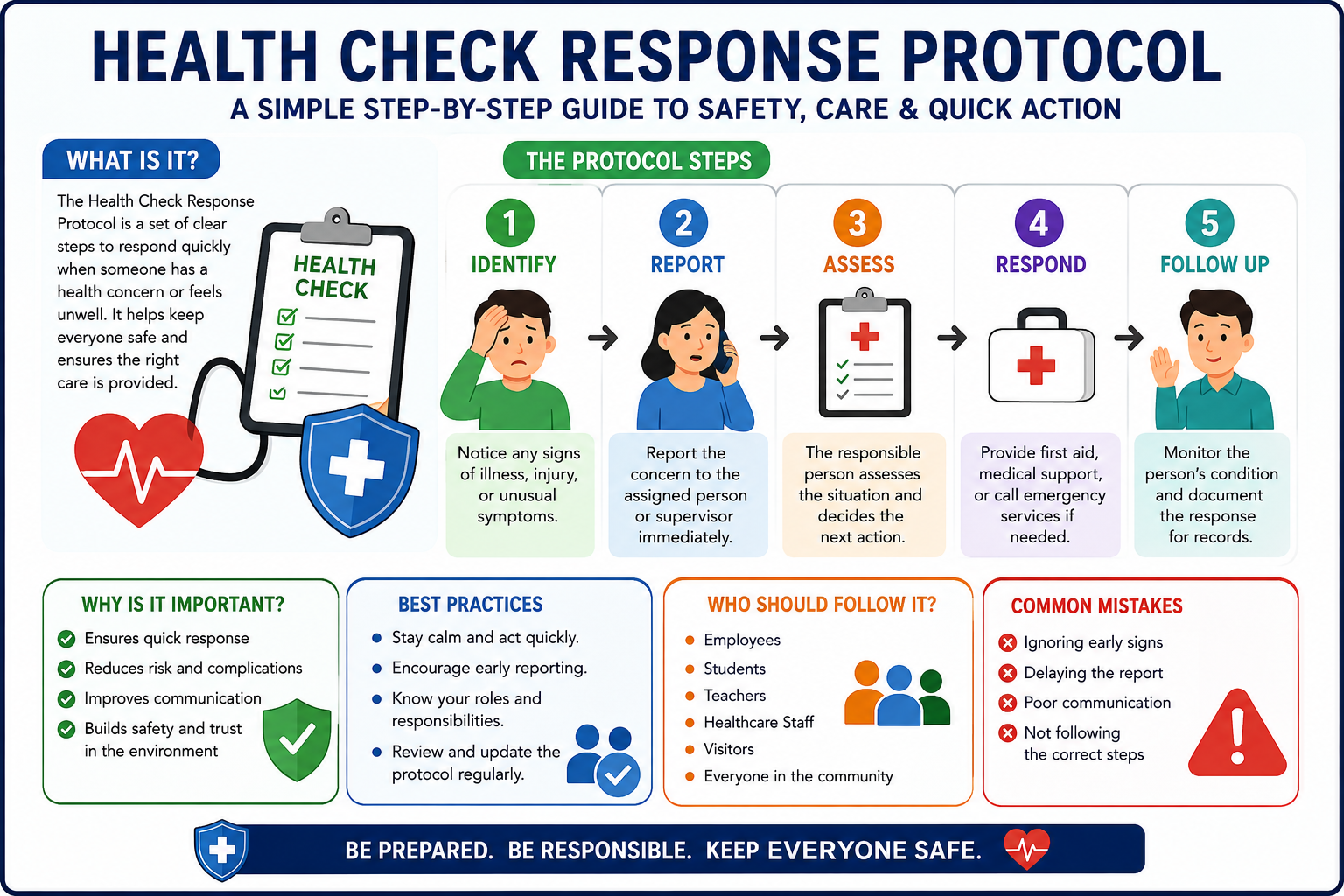
The health check response protocol is an important process that helps people respond quickly during health concerns or emergencies. It provides clear steps that improve communication and support faster action. Because every second matters, a simple plan helps people stay calm and make better decisions.
Many schools, workplaces, hospitals, and organizations use a health check response protocol to protect people. Instead of reacting with confusion, everyone follows the same process. As a result, problems become easier to manage, and help arrives more quickly when needed.
A good health check response protocol also builds confidence. People know what to do, who to contact, and how to report a health issue. Therefore, they feel more prepared when unexpected situations happen. Good preparation often leads to better outcomes for everyone involved.
What Is a Health Check Response Protocol?
A health check response protocol is a set of instructions that explains how to respond when someone reports a health concern. It includes simple steps that guide people from the first report until the situation is resolved. Every step has a clear purpose.
The protocol helps reduce confusion because everyone follows the same plan. Instead of guessing what to do next, people can focus on helping safely and quickly. This organized approach improves teamwork and supports faster decision-making during stressful situations.
Many organizations create their own version of a health check response protocol based on their needs. However, the main goal always stays the same. It protects people, improves communication, and supports a safe environment for everyone.
Why the Health Check Response Protocol Matters
Every organization wants to keep people safe. Therefore, having a clear response plan is very important. A health check response protocol helps people recognize problems early and respond before they become more serious.
Quick action often makes a big difference. For example, reporting symptoms early allows trained staff to provide support without delay. Because of this, small issues may stay under control instead of becoming larger problems.
A clear process also reduces panic. People know exactly what steps to follow. As a result, they stay calmer and work together more effectively during difficult situations.
Key Goals of a Health Check Response Protocol
One important goal is protecting health and safety. Every step focuses on reducing risks while helping people receive the care they need. Safety always comes first during any health-related event.
Another goal involves clear communication. Team members should know who reports the issue, who receives the report, and who takes action. Good communication prevents misunderstandings and keeps everyone informed.
The protocol also supports consistency. Everyone follows the same instructions instead of creating different responses each time. Therefore, the organization becomes more organized and prepared.
Main Steps in a Health Check Response Protocol
The first step is identifying the health concern. Someone notices symptoms, an injury, or another problem and reports it immediately. Early reporting allows quicker action and better decision-making.
Next, the responsible person reviews the situation and decides what support is needed. Sometimes simple first aid helps. Other situations may require medical professionals or emergency services.
Finally, the team records what happened and reviews the response. Learning from each event helps improve the health check response protocol for future situations.
Benefits of Using a Health Check Response Protocol
A well-planned health check response protocol offers many benefits. First, it improves safety because everyone understands the correct response. Clear instructions reduce mistakes and increase confidence.
Second, the protocol improves teamwork. Employees, teachers, healthcare workers, or volunteers know their responsibilities. Therefore, they work together instead of becoming confused during stressful moments.
Third, organizations build trust. People feel safer when they know a clear health response plan already exists. This confidence creates a stronger and more supportive environment.
Best Practices for Success
Review the protocol regularly so everyone understands the latest procedures. Regular training helps people remember important steps. It also improves confidence before real situations happen.
Encourage people to report health concerns without delay. Quick reporting often prevents bigger problems later. Therefore, organizations should create an environment where people feel comfortable speaking up.
Practice emergency drills several times each year. These exercises help teams improve communication, identify weaknesses, and respond more effectively during actual events.
Common Mistakes to Avoid
One common mistake is ignoring small warning signs. Minor symptoms sometimes become serious if nobody responds quickly. Therefore, every health concern deserves proper attention.
Another mistake involves poor communication. Missing information can delay important decisions. Teams should share updates clearly and accurately throughout the response process.
Some organizations also forget to review their procedures. A health check response protocol should improve over time. Regular reviews help keep every step useful and effective.
Tips for Better Communication
Speak clearly when reporting a health concern. Share only the important facts and avoid guessing. Accurate information helps responders make better decisions quickly.
Listen carefully to instructions from trained staff. Following directions improves safety and reduces confusion. Teamwork becomes much stronger when everyone communicates respectfully.
Keep records whenever necessary. Good documentation helps organizations review events, improve future responses, and learn from every situation.
FAQs
1. What is a health check response protocol?
A health check response protocol is a step-by-step plan that explains how to respond to health concerns safely and quickly.
2. Why is a health check response protocol important?
It improves safety, supports faster action, and helps people communicate clearly during health-related situations.
3. Who should follow a health check response protocol?
Schools, workplaces, hospitals, community groups, and many other organizations can use one.
4. How often should the protocol be reviewed?
Organizations should review it regularly and update it whenever procedures or risks change.
5. What is the biggest benefit of a health check response protocol?
The biggest benefit is that it helps people respond quickly, safely, and consistently during health concerns.
Conclusion
A health check response protocol provides a simple and organized way to respond during health-related situations. It improves communication, supports teamwork, and helps protect everyone involved. By following clear steps, reviewing procedures regularly, and encouraging early reporting, organizations create safer environments. A strong health check response protocol is not only a plan. It is an important part of keeping people healthy, prepared, and confident every day.
